Blog Archives
Electrically Engineering a T into a 3
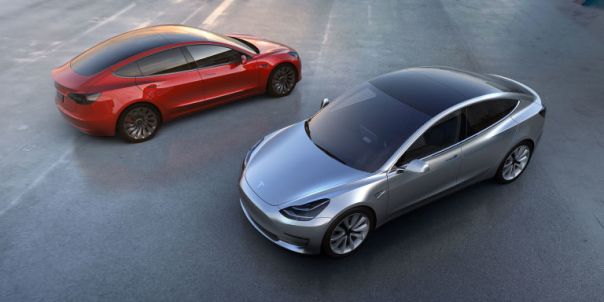
(Tesla Model 3)
Tesla Motors is the conservative argument for positively responding to climate change/global warming/global cooling/environmental issues.
Tesla announced Thursday that it has received 325,000 preorders for its recently unveiled Model 3. If it sells every car that’s been reserved, the company says it will earn enough revenue to make this the “biggest one-week launch of any product ever.”
–Andrew J. Hawkins, The Verge
One single car using gas or one single power plant is not the problem, but it’s the cumulative effect of millions of drivers or hundreds of power plants that has a meaningful impact on the release of carbon emissions into the air. Therefore, with cars, the goal is to present the marketplace with affordable, high-quality options.
Enter Elon Musk and his burgeoning company, Tesla Motors, that’s appropriately named after famed inventor Nikola Tesla.
This tech-driven company (see what I did there) is clearly being rewarded by anxiously excited followers for its ingenuity, hard-work, determination and recognition of a demand that’s marketed to a large portion of the American people to consider and even reserve for purchase next year.
Innovation is and has always been the right path towards a bright future that empowers the individual and then, as a result, empowers the collective. One electric car will not make a difference, but millions of electric cars on the road will change the carbon emissions equation. The power of individualism, innovation and opportunity must be taught and encouraged to this generation and future generations because of the incentives and the how inventiveness has benefited societies throughout history.
The iPhone was not dreamed up because of a tech regulation. Neither was the transportation revolution known as Henry Ford’s Model T, which was the first affordable automobile designed, built and produced for the American people roughly 100 years ago.
The close rhyming between 3 and T was a nice touch, Mr. Musk.
Conversely, what sense does it make to penalize consumers/the public with environmentally strangling regulations (especially without a Kung Fu grip on Mother Nature) and policies that punish people and companies? Photo-ops at these high-profile gatherings, where the focus is to cast blame and then reward a relatively select few participants with control and influence over the many, doesn’t project a hopeful future, especially when the measures taken amount to a gesture instead of a silver bullet.
Fiscal pain and high-minded barriers will not solve substantial problems. By high-minded, that refers to opponents of industries some deem unacceptable (like coal), but who have no better or ready alternatives for those workers who need to feed and provide for themselves and/or their families. Nobody likes pollution and some regulations are good and necessary, but, like government, figuring out policies to keep the regulatory code as small as possible is best.
There’s a paramount difference between idealism rooted in reality (conservatism) and idealism floating around in fantasy (liberalism).
Regardless of the extent that people across the political spectrum believe in global warming or global cooling (100%, 50%, 25%, 7.4%), the most important issues going forward are agreeing on a common goal and determining the most intelligent and economical approach.
We should strive for a carbon emissions-free future, achieved through empowering the engine of innovation.
In many cases,
- Innovation = Revolutions by and for the people
- Regulation = Power, control and influence over the people by and for a select few
$27,500 for the Tesla Model 3 (with $7,500 tax credit).
This inviting price point will attract car buyers in the 5-Star safety rated, 5-seat sedan in the $25K-$35K market, which will directly challenge car models from household names Toyota and Honda and even Lexus, Mercedes and Audi. If the Model 3 is successful and proves to have a reliable re-charging infrastructure and if (the recommended) nightly charging pattern for the 215-mile battery range like your smartphone results in a future worth the investment, then the conversation to join the names Elon Musk and Henry Ford in the same sentence in history books will begin.
People, once again, have an opportunity to change the world by buying a car.
Tesla Motors is a prime example of dreaming big, showcasing the power of the individual, American ingenuity and supplying a demand that could very well revolutionize cars, the transportation grid and solving a problem with carbon emissions in the environment with a positive, captivating solution that’s generating a magnetic appeal to its products and brand.
The Model 3’s engine may be nearly silent, but it still sounds like a revolution…
Happy Monday!
The future for Marty McFly and Doc Brown was 2015, but 2016 is when the public can gets its first real grip on that iconic future…
The Nike HyperAdapt 1.0 will be available to every single Back to the Future fan in the world during, “this holiday season.” E.A.R.L (Electro Adaptive Reactive Lacing), which surprisingly reads and sounds better spelled out, will be sold using the shoe’s accompanying Nike + app.
On the business side, the critical takeaway from Nike’s eye-popping news is that while the brain power of their company’s design and innovation team to build this crazy awesome shoe of the future was crafted at their creative headquarters with their minds, their nostalgic hearts undeniably beat in rhythm with each of their giddy customers. Nike’s prowess for telling a compelling and personalized story with their new products is akin to Apple’s genius for the same business practice (especially in the Jobs era).
Everyone wants to see and own that “one more thing” that will change everything.
And Nike’s brand has literally taken that wishful aspiration to the next-level:
The future.
Have an Awe-Inspiring Week!
Reinventing the Wheel
How do you change the wheel?
Enter 21st century innovation.
Goodyear tires, familiar to anybody who has ever seen or owned a car (or looked up during a college football game), has dedicated its resources to envisioning a wondrous future of driving. In the real world, life-altering advancements take time, brilliance, money, luck, ingenuity, patience and courage.
And let’s not forget persistence.
Will the public (and not just investors) buy-in to a game-changing innovation?
When it comes to cars and the sad realities of inevitable accidents, repairs, flat tires, and a variety of inconveniences and limitations, people are exhausted at the same old routines of car parts not withstanding basic road conditions as they were promised at the dealership. In the same spirit as Dyson and its revolutionary design (for vacuums) of a rotating ball for limitless agility, Goodyear has released a video of a tire that could very well change the way we drive in the future that doesn’t involve the terrifying concept of a driver-less car.
That’s a very cool idea.
Did I just say tires are cool?
Yes, yes I did.
Not only do the Goodyear Eagle-360 concept tires have the realistic potential to be marketable, but these tires could transform how roads are designed in the future. At the highest level, this country’s infrastructure could be directly impacted by this tire design. Innovation takes time to become a valued and reliable product with people. There are many, many stages of development, retooling and testing.
With all that being said, that daring first step is always exciting.
It gets the ball rolling.
America’s Next Top Model?
There’s no Flux Capacitor, but…
Business Insider is reporting that electric car company Tesla, led by innovator Elon Musk, will be making the Model 3 that will be built by year-end 2017 (or possibly the beginning of 2018) and will not exceed the $35,000 mark. Usually tens of thousands of dollars more expensive, this appears to be the hyped-about (and necessary) next step towards an emissions-free car market.
A small step, yes, but it’s a step forward that leaves a smaller footprint burnout.
$35,000 is an expensive price tag, but it’s at least within range and consideration of people who buy luxury SUV’s and luxury sedans and the Toyota Avalon. Business Insider also reported that applicable tax breaks and incentives could spark a price plummet of nearly $10,000.
Ladies and gentlemen, that’s Toyota Camry territory.
The point is that Tesla’s forthcoming innovation towards a more affordable electric car, with their current models receiving sensational reviews, should expand their marketplace and improve their target demographics. People will be able to invest in a car and a renewable future. With the Millennial generation that focuses on (and responds to) business pursuits that simultaneously promote social good, Tesla’s Model 3 could become the next iPhone in the sense that the next versions will be followed by the masses with anticipation and an infectious energy for its new gadgets and groundbreaking features for the road.
Let’s not dive into Musk’s sour feelings of Steve Jobs and Apple right now. The above hypothesis was just a general observation.
The Model 3 will shine its lights on March 31, 2016: Plug it into your calendars.
 Jimmy's Daily Planet