Blog Archives
Electrically Engineering a T into a 3
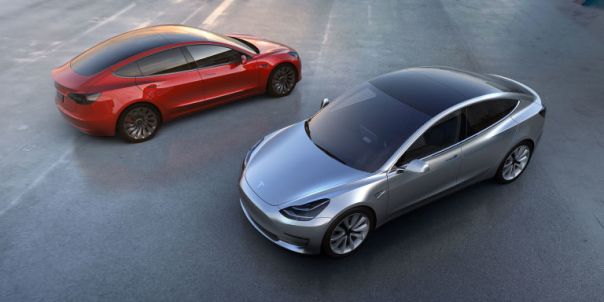
(Tesla Model 3)
Tesla Motors is the conservative argument for positively responding to climate change/global warming/global cooling/environmental issues.
Tesla announced Thursday that it has received 325,000 preorders for its recently unveiled Model 3. If it sells every car that’s been reserved, the company says it will earn enough revenue to make this the “biggest one-week launch of any product ever.”
–Andrew J. Hawkins, The Verge
One single car using gas or one single power plant is not the problem, but it’s the cumulative effect of millions of drivers or hundreds of power plants that has a meaningful impact on the release of carbon emissions into the air. Therefore, with cars, the goal is to present the marketplace with affordable, high-quality options.
Enter Elon Musk and his burgeoning company, Tesla Motors, that’s appropriately named after famed inventor Nikola Tesla.
This tech-driven company (see what I did there) is clearly being rewarded by anxiously excited followers for its ingenuity, hard-work, determination and recognition of a demand that’s marketed to a large portion of the American people to consider and even reserve for purchase next year.
Innovation is and has always been the right path towards a bright future that empowers the individual and then, as a result, empowers the collective. One electric car will not make a difference, but millions of electric cars on the road will change the carbon emissions equation. The power of individualism, innovation and opportunity must be taught and encouraged to this generation and future generations because of the incentives and the how inventiveness has benefited societies throughout history.
The iPhone was not dreamed up because of a tech regulation. Neither was the transportation revolution known as Henry Ford’s Model T, which was the first affordable automobile designed, built and produced for the American people roughly 100 years ago.
The close rhyming between 3 and T was a nice touch, Mr. Musk.
Conversely, what sense does it make to penalize consumers/the public with environmentally strangling regulations (especially without a Kung Fu grip on Mother Nature) and policies that punish people and companies? Photo-ops at these high-profile gatherings, where the focus is to cast blame and then reward a relatively select few participants with control and influence over the many, doesn’t project a hopeful future, especially when the measures taken amount to a gesture instead of a silver bullet.
Fiscal pain and high-minded barriers will not solve substantial problems. By high-minded, that refers to opponents of industries some deem unacceptable (like coal), but who have no better or ready alternatives for those workers who need to feed and provide for themselves and/or their families. Nobody likes pollution and some regulations are good and necessary, but, like government, figuring out policies to keep the regulatory code as small as possible is best.
There’s a paramount difference between idealism rooted in reality (conservatism) and idealism floating around in fantasy (liberalism).
Regardless of the extent that people across the political spectrum believe in global warming or global cooling (100%, 50%, 25%, 7.4%), the most important issues going forward are agreeing on a common goal and determining the most intelligent and economical approach.
We should strive for a carbon emissions-free future, achieved through empowering the engine of innovation.
In many cases,
- Innovation = Revolutions by and for the people
- Regulation = Power, control and influence over the people by and for a select few
$27,500 for the Tesla Model 3 (with $7,500 tax credit).
This inviting price point will attract car buyers in the 5-Star safety rated, 5-seat sedan in the $25K-$35K market, which will directly challenge car models from household names Toyota and Honda and even Lexus, Mercedes and Audi. If the Model 3 is successful and proves to have a reliable re-charging infrastructure and if (the recommended) nightly charging pattern for the 215-mile battery range like your smartphone results in a future worth the investment, then the conversation to join the names Elon Musk and Henry Ford in the same sentence in history books will begin.
People, once again, have an opportunity to change the world by buying a car.
Tesla Motors is a prime example of dreaming big, showcasing the power of the individual, American ingenuity and supplying a demand that could very well revolutionize cars, the transportation grid and solving a problem with carbon emissions in the environment with a positive, captivating solution that’s generating a magnetic appeal to its products and brand.
The Model 3’s engine may be nearly silent, but it still sounds like a revolution…
Happy Monday!
The future for Marty McFly and Doc Brown was 2015, but 2016 is when the public can gets its first real grip on that iconic future…
The Nike HyperAdapt 1.0 will be available to every single Back to the Future fan in the world during, “this holiday season.” E.A.R.L (Electro Adaptive Reactive Lacing), which surprisingly reads and sounds better spelled out, will be sold using the shoe’s accompanying Nike + app.
On the business side, the critical takeaway from Nike’s eye-popping news is that while the brain power of their company’s design and innovation team to build this crazy awesome shoe of the future was crafted at their creative headquarters with their minds, their nostalgic hearts undeniably beat in rhythm with each of their giddy customers. Nike’s prowess for telling a compelling and personalized story with their new products is akin to Apple’s genius for the same business practice (especially in the Jobs era).
Everyone wants to see and own that “one more thing” that will change everything.
And Nike’s brand has literally taken that wishful aspiration to the next-level:
The future.
Have an Awe-Inspiring Week!
Happy Monday!
One more…song?
The 2015 Steve Jobs movie, featuring Michael Fassbender (who actually didn’t look like the title character) is the latest cinematic treatment of the Apple co-founder who changed the way we perceive and anticipate technology.
In fact, this movie is almost ready to earn a permanent spot on our movie shelf (February 16th, to be exact).
After watching the past few movies about Mr. Jobs, the preeminent film still hasn’t arrived and, quite possibly, may never arrive at a theater near you. Fully capturing this tech icon’s life and career into a script as innovative and compelling as his products has proven an allusive task.
But what about a song?
The Maccabees did not write “Grew Up at Midnight” for Steve Jobs, but composer Daniel Pemberton (2015’s Steve Jobs movie) recognized how this song with a smashing crescendo paints the scene of a grand legacy coming into focus. And it was all sparked from an imaginatively ambitious youth.
The song was a perfect fit for the film.
This song is also a perfect fit for those who recognize the value in biting into an apple at midnight.
Have an Insanely Great Week!
Time to Fold on TV
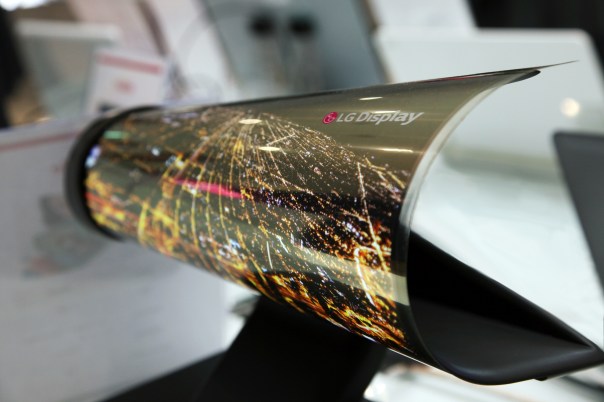
(LG Display)
“The company will also showcase futuristic concept displays that highlight the dynamic forms that OLED can achieve, including the world’s first 30R 18-inch rollable display that can be rolled-up like a newspaper…”
(LG Press Release)
The January 4, 2016 press release from technology giant LG (Life’s Good) disclosed many exciting products in-and-out of development for the annual forward-thinking Consumer Electronics Show in Las Vegas. Specifically, the OLED screen that bends with impressive flexibility and resolution presents a unique opportunity for a more convenient future.
As phones and tablets continue to increase in size and inflexibility (iPad Pro, damn), there is a natural instinct to ponder if a Zack Morris phone-wave is upon us?
Keep in mind that retro is always in style, especially the nineties.
Fortunately, LG may have just changed shrunk rolled the game back to size while peeking forward towards what may be commercially sold during the forthcoming third decade of the 21st century.
Envisioning LG’s flexible screen for televisions makes anyone impossibly curious about how TV-watching will change in the future. The question that comes to mind is if we (consumers) will actually have the option to roll up a high-definition TV like the Wall Street Journal and carry it to any flat surface in our home and simply stick it up like a magnet on a fridge?
Crazy.
The even crazier question: Who’s been bringing the Fruit Roll-Ups to LG’s innovation lab?
 Jimmy's Daily Planet