Blog Archives
Our Nation’s Artists
This morning I needed a light jacket. Normally, this isn’t a big deal except for the fact it’s June 7th. I guess Mother Nature decided to take a refreshing breath mint or two and blow her new-found coolness across the Midwest.
Just a little global cooling to make Al Gore go crazy for a few days.
Inexplicably, this cold front in June sparked random curiosity and wonderment of Americans from yesteryear…like yesteryear.
Having always been fascinated with history, this sudden reflective contemplation to the past patriots who lived in this country one hundred to two hundred and some odd years ago is not too surprising a revelation. Still, it’s noteworthy to think so far back in time without taking part in a tour or sitting in a history class.
Speaking of a historical tour, I have fond memories of visiting Colonial Williamsburg in Virginia, soaking in all the astonishing buildings, artifacts, food, people, gardens, modes of transportation and anything and everything found within its parameters. Uniquely American, it opened my eyes into the improbable inception of the United States of America and the ambiguous journey everyone took part in together in building the foundations of a new nation. An insightful quote by Martin Luther King, Jr. illustrates this courageous endeavor taken by our adventurous ancestors.
“Faith is taking the first step even when you don’t see the whole staircase.”
When my family and I visited Colonial Williamsburg, it was summer and it was hot. Not warm with a light cloud of humidity or it might be hot enough to swim, but, “Dog Days of Summer” hot. While partaking in the exercise of sweating and walking, there were countless Revolutionary soldiers and townspeople dressed in traditional late-1770s clothing. The attire was heavy and assuredly sweltering, yet they never showed discomfort. And here I was, in shorts and a t-shirt, feeling hot and uncomfortable. I made damn sure to shape up and wipe my brow when walking by the cannon operators!
Like Washington, D.C., Colonial Williamsburg should be a national requirement for all students to visit. The sights and sounds are spectacular and together creates an unforgettable experience and appreciation for our forefathers and foremothers and everything they endured to build the great nation we live in today. When it was hot, they sat on their porch or ran around outside and enjoyed the company of their family and neighbors. Some maintained their luscious gardens filled with colorful flowers and delicious fruits and vegetables while others socialized in stores around the town they all helped to build and support.
Despite the fact Colonial Williamsburg is not a quick stroll down the road, the Ohio Village is within a short driving distance. This is a place frozen in time dating back to the 19th century. Located in the shadows of Crew Stadium, the Ohio History Center and this thing they call a, “freeway,” the Ohio Village offers its patrons a momentary break from 21st century realities to visit the forever sought after and admired, “much simpler time.”
When it was too hot to stay inside, they went outside. When it was too cold to be outside, they stayed in, bundled up and made a fire. And when it was dark and they needed light, they lit candles. Our American ancestors were resourceful and did what they had to, whatever that meant. What’s more is whether it was during the 18th or 19th centuries, Americans have managed to pull off truly remarkable achievements. They took a blank page on a shaky canvas and, during their time, added their individual paint strokes and color splashes to create the foundation of the masterpiece we all see and enjoy today known as the United States of America.
Pretty cool, right? I get chills just thinking about it.
And come the fourth day in July, I know I’ll get goosebumps in the unrelenting heat while gazing up at fireworks in the same way our nation’s forefathers and foremothers did: celebrating the incomparably brilliant idea that is the American dream.
The Power of a Horse
Aliens. Great White Sharks. A whip-happy, gun-slinging professor of archaeology. Dinosaurs. A horse?
(Rolling Stone)
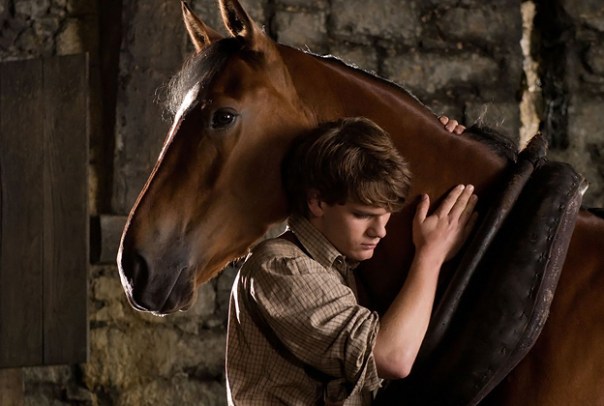
Steven Spielberg, one of the greatest movie directors of all-time, has introduced the public to a wide-range of characters, most of which grab our attention from the title’s alone. “Jaws,” “Indiana Jones and the Temple of Doom” and “Jurassic Park” are just a few examples. But what about, “War Horse”? First reactions do not stir up emotions of great excitement. It’s a story about a horse that was involved in World War I.
Okay…?
And yet, it is still Steven Spielberg after all. It is his impressive filmography that we can instinctively conclude that a great story is waiting to be told and that he is the perfect person for this job. Somehow, someway, we the audience will come to relate to a horse from a war. In some fashion, we will sympathize with a horse and be intrigued by its journey in a way similar to that of E.T.
Still though, this undertaking seems about as difficult as plowing a field scattered with rocks.
“War Horse,” to my surprise, is a beautifully tragic, yet inspirational story of unfaltering friendship. Throughout Joey’s life (the horse), he is connected to life all around him. As peculiar as it may read, Joey’s many relationships throughout his joyful and perilous journey resembled something remarkably close to kinship. Surprisingly, the love and admiration the various characters felt for Joey in their various situations was felt through the screen. We start to understand that a horse, in this instance, represents much more than a mere animal. Joey, to those who took the time, was profoundly more than power and dashing speed.
Watching this movie in the evening of Memorial Day was special. The themes of military service and, well, horses, sparked a flashback dating back generations. My Great-Grandfather, Albert C. Ziemann, served in World War I in the U.S. Cavalry at the independent age of 26. He registered for the draft out of Milwaukee, Wisconsin and was stationed in France.
The following are family recollections:
He was once in a weather observation balloon when it crashed into a French apple orchard. Like in the battle scene near the end of, “War Horse,” he too was gassed. Fascinatingly, General “Black Jack” Pershing (formally John J. Pershing) had, at one point, wanted a rare hawk of his to be stuffed. While asking up and down the ranks for an individual to assist him with this unique task, Ziemann, who enjoyed taxidermy as a hobby, volunteered his services to the General. For Ziemann, this was likely seen as a genuine win-win scenario because he would be doing taxidermy for the prestigious General and this job got him off the front lines.
Stuffing the hawk was expected to be a two-day assignment, but it stretched out to two weeks. One of the most incredible stories of Ziemann was that he helped General Pershing take care of his horses! It’s assumed this coincided with the two-week hawk-stuffing project. Regardless, what a tremendous honor and experience.
Members of my family have recalled that Ziemann enjoyed riding horses. One day in 1963, he had been riding horses. Devastatingly, later that day, he died of a heart attack. Despite the sadness of this memory, it is important because it portrays how his love of horses was not a two-week and/or temporary crush, but likely a lifelong love affair. The connection between a person and a horse is special and can endure in times of war and peace.
During this Memorial Day, in 2013, I found myself reflecting back to almost one hundred years into the past to my Great-Grandfather, Albert C. Ziemann, all the while relating his experiences to those told in the magnificent story of, “War Horse.”
From all of this, two things are certain:
I am very proud and amazed of my Great-Grandfather’s service during World War I.
And that Steven Spielberg is one hell of a storyteller.
Bottom of the Tenth
“As a celebration of the magic of movies involving baseball, at least one scene from a different film will be posted each day for the next nine days…”
—From “Top of the First” March 28th
One of the best scenes in “Angels in the Outfield” is when foster caretaker Maggie Nelson stands up at a press conference regarding George Knox and his statements about his team being assisted by angels during their unthinkable winning streak en route to a potential pennant. Hank Murphy, the baseball club’s owner, had called the event so Knox would publicly deny any such spiritual guidance his players may have been receiving from above.
Maggie said it best.
Maggie Nelson: My name is Maggie Nelson. I take care of foster kids. One of these boys is the child who can see angels. He could stand up right now and tell you what’s going on and I’d know you’d just laugh at him. But, when a professional football player drops to one knee to thank God for making a touchdown, nobody laughs at that. Or when a pitcher crosses himself before going to the mound, no one laughs at that either. It’s like your saying it’s okay to believe in God, but it’s not okay to believe in angels. Now, I thought that they were on the same team.
Hank Murphy: Is it your belief, ma’am, that angels play baseball?
Maggie Nelson: Since the all-star break, yes. We all need someone to believe in. Every child I have ever looked after has someone: an angel. You’ve got to have faith. You’ve got to believe. You have to look inside yourself. The footprints of an angel are love, and where there is love, miraculous things can happen. I’ve seen it.
(sits)
Mel Clark: [stands] I’d also like to say something. I don’t know if there are any angels here other than the twenty-five of us in uniform. But I know there is one thing I won’t do: I won’t play for anyone but George Knox. I believe in him.
Every athlete has experienced a moment during competition when your energy levels are depleted and exhaustion has spread from your head to your toes. In this case, Gatorade will not do the trick. This situation calls for more than an energy drink.
With a full-count, this next pitch by the Angels’ Mel Clark is for the American League Pennant…
The ending/above two clips of “Angels in the Outfield” is the perfect ending to my favorite movie made about baseball of all-time! It’s fun, has heart and lots of laughs for people of all ages. This Disney masterpiece is a timeless classic that reminds us all about the magic of sports and the inspiring nature of the human spirit.
This concludes the inning-by-inning celebration of the best scenes from the best movies involving baseball.
Can miracles from the heavens transpire in sports and life in general? To quote the young, but very wise JP, “It could happen!”
 Jimmy's Daily Planet